

1. Domain of study:
Anantapuramu district of Andhra Pradesh is one of the most drought-prone regions, receiving about 550–552 mm of erratic annual rainfall. The area is dominated by red soils (Alfisols) and uneven terrain, limiting moisture retention and crop productivity. Most farmers depend on rainfed agriculture, with groundnut and red gram in kharif and Bengal gram in rabi. Frequent droughts and weather aberrations restrict cropping and affect livelihoods. In this context, the present study highlights a success story of a farmer from East Narsapuram who adopted a K -Lepakshi groundnut variety and achieved good profits despite adverse climatic conditions.
2. Activities implemented by KVK:
- The farmer, A. Adinarayana Reddy from East Narsapuram, Singanamala (M), Anantapuramu (Dt.) is basically a successful farmer in the Singanamala mandal of the district. But, due to the prolonged dry spells existed in the district and scanty rainfall, forced the farmer to go for various drought tolerant varieties of crops in Groundnut, Redgram, Castor.
- KVK Reddipalli adopted the East Narsapuram village in 2022 under NICRA adopted villages. He was one of the progressive farmers in the village actively involved in various intervention programmes conducted by KVK, Reddipalli under NICRA scheme.
- The farmers are experiencing lower yields than the district and national average productivity due to uneven distribution of rainfall, dry spells during crop period, susceptibility to pest and diseases.
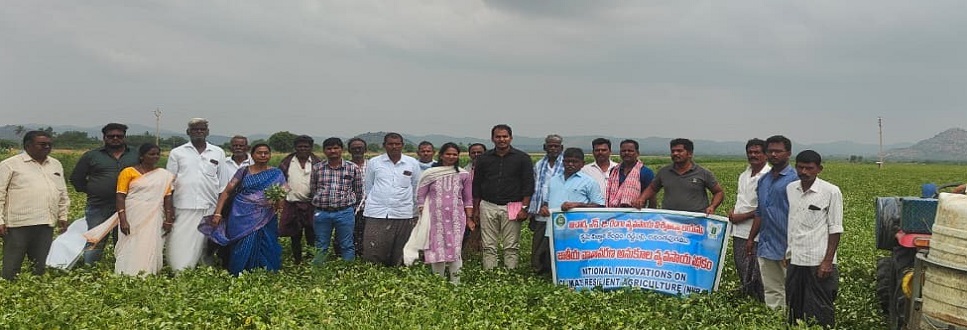
- To address this challenge KVK Reddipalli, demonstrated the drought tolerant variety K-Lepakshi in 4 ha involving 10 farmers in the adopted village. The improved technology comprised of short duration variety groundnut (K-Lepakshi) vs Farmer’s practice comprised groundnut variety K-6.
- K-Lepakshi is drought tolerant up to 60 days and contains 28 % proteins and 51% oil content with an average potential yield of 20-25 q ha-1 in rainfed region and 45-50 q ha-1 under irrigated conditions.
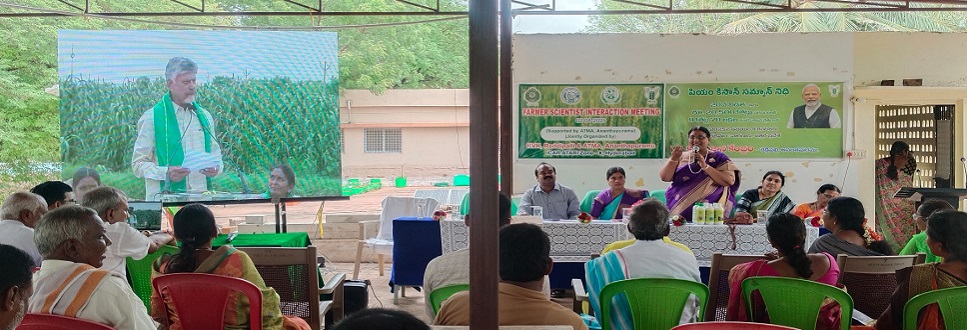
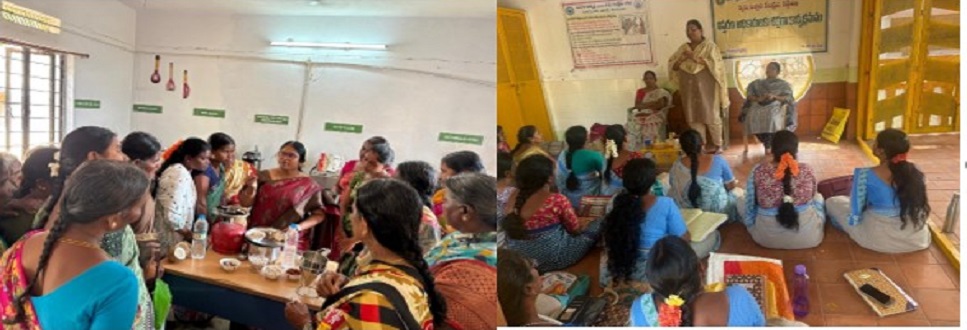
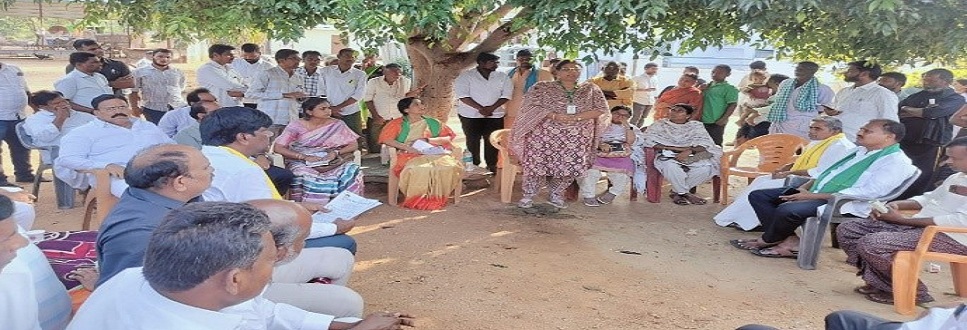
- As a part this KVK Reddipalli conducted farmer trainings and awareness programmes on its benefits and cultivation practices. Regular field visits were undertaken to monitor crop growth and provide timely technical guidance. Continuous advisories and need-based suggestions were also given to ensure better adoption and improved productivity.
- For the reclamation of alkali soils he followed gypsum application and also disseminated it among fellow farmers in adjacent village.
- K-Lepakshi recorded overall 28.7% increase in pod yield over farmer’s practice. Farmer got higher net income of Rs. 42483/- compared to farmers practice with Rs.17130/-. Gross income and B:C ratio (1.92) was more for K-Lepashi compared to normal farmers practice (K 6).
3. Output of the intervention:
4. Outcome and impact:
Yield, Cost of cultivation and B:C ratio of Groundnut
|
Treatment |
Yield (kg/ha) |
Cost of cultivation (Rs/ha) |
Gross income (Rs/ha) |
Net income (Rs/ha) |
B:C ratio |
|
Farmers practice- K 6 |
944 |
51433 |
68563 |
17130 |
1.33 |
|
K-Lepakshi |
1215 |
45762 |
88245 |
42483 |
1.92 |
|
|
|
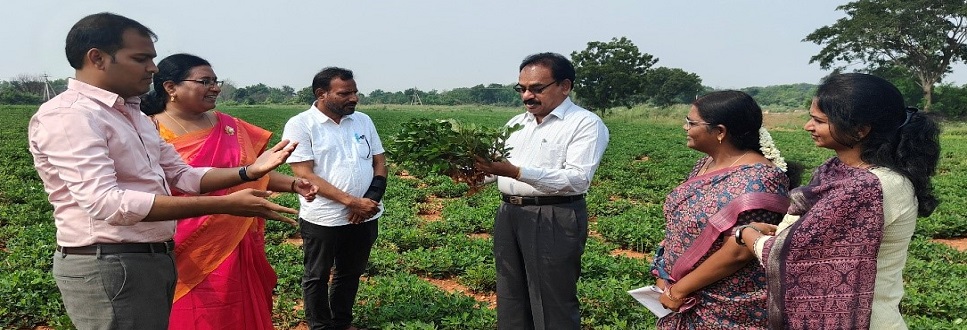
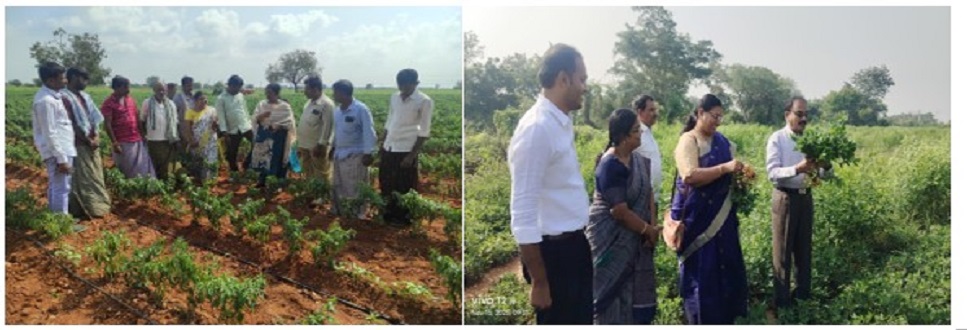
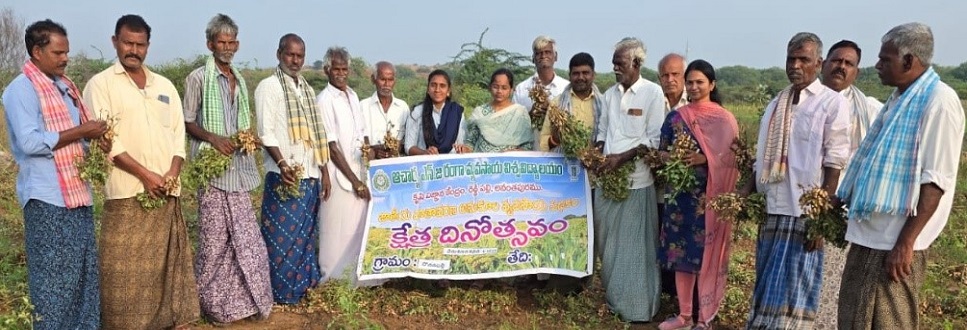
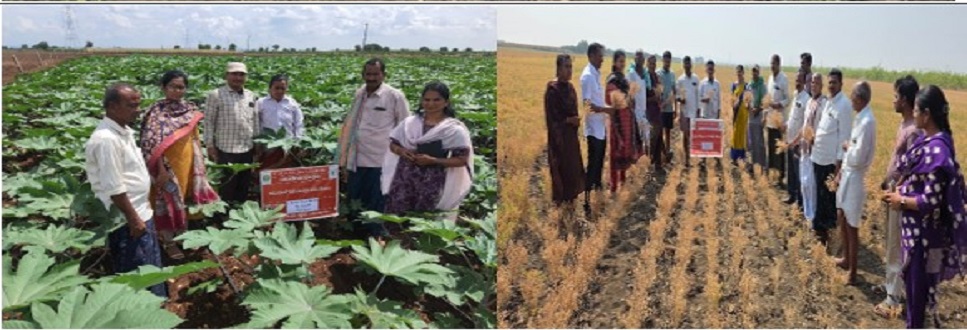
| Field demonstration of short duration groundnut variety (K-Lepakshi) over Farmer’s practice comprised groundnut variety K-6. | |


| The improved variety K-Lepakshi was found efficient in productivity and profitability by recording significantly the highest yield with low pest and disease incidence. |


