


|
Name of farmer |
Sri. T. Manohar |
 |
|
Address |
Village: Kottalapalli Tehsil: Peddavaduguru District: Ananthapuramu |
|
|
Age |
42 |
|
|
Education |
10th standard |
|
|
Landholding |
2 ha |
|
|
Source of Irrigation |
Rainfed |
|
|
Area under HDPS/CS/ELS |
2.0 ha |
|
|
Year |
2025-26 |
|
|
KVK involved |
Krishi Vigyan Kendra, Reddipalli, Ananthapuramu |
Description of the story
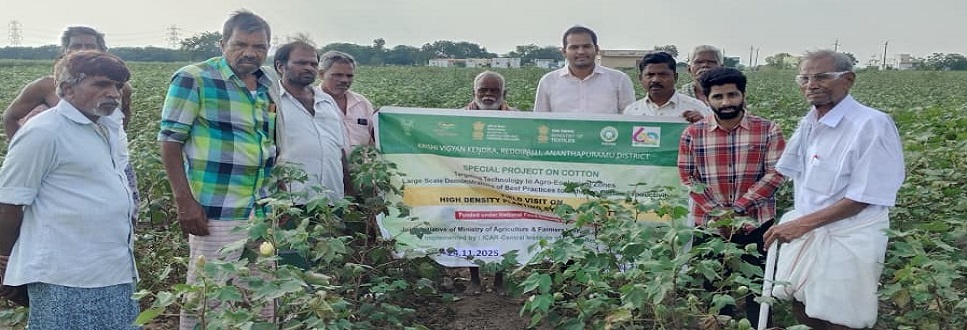
Sri. T. Manohar, a progressive farmer from Kottalapalli village of Peddavaduguru mandal in Ananthapuramu district, Andhra Pradesh, successfully improved seed cotton productivity and profitability during 2025–26 by adopting the High-Density Planting System (HDPS) along with scientific crop management practices under the guidance of Krishi Vigyan Kendra (KVK), Reddipalli.
In the rainfed conditions of Ananthapuramu, cotton cultivation is often affected by erratic rainfall, poor plant population, and inefficient input use under conventional spacing. To overcome these challenges, HDPS technology was demonstrated in the farmer’s field using RCH-971 BG-II (Rasi Swift) hybrid cotton with a seed rate of 6 packets per acre and recommended spacing of 90 × 30 cm. The improved crop geometry ensured optimum plant density, better sunlight interception, and efficient utilization of soil moisture and nutrients.
Integrated nutrient management and balanced fertilizer application were followed to improve nutrient-use efficiency and maintain soil health. To control excessive vegetative growth and improve boll formation, mepiquat chloride was applied as a plant growth regulator. This helped reduce internodal elongation, improve sympodial branching, and enhance boll retention and uniform development.
The crop was harvested in three pickings, resulting in better lint quality and higher yield. By adopting HDPS with precision agronomic practices, the farmer achieved a seed cotton yield of 12.3 quintals per acre, which was significantly higher than conventional practices in the region. The total cost of cultivation was ₹35,600 per acre, while the gross returns realized were ₹94,833 per acre, demonstrating higher profitability through efficient input use and improved crop management.
The success of this demonstration highlighted HDPS as a climate-resilient, resource-efficient, and economically viable technology for rainfed cotton cultivation in semi-arid regions. Encouraged by the results, the farmer expressed interest in expanding the technology in the coming seasons and motivating fellow farmers for wider adoption.
Details of intervention
|
Name of the hybrid/variety |
RCH-971 BG-II Rasi swift |
|
Seed rate |
6 packets/acre |
|
Spacing |
90 X 30 cm |
|
PGR Spray |
Mepiquat chloride-once |
|
No of Pickings |
Three |
|
Cost of production |
35,600.00 |
|
Seed cotton yield |
12.3 q/acre |
|
Gross income |
94,833.00 |
|
|

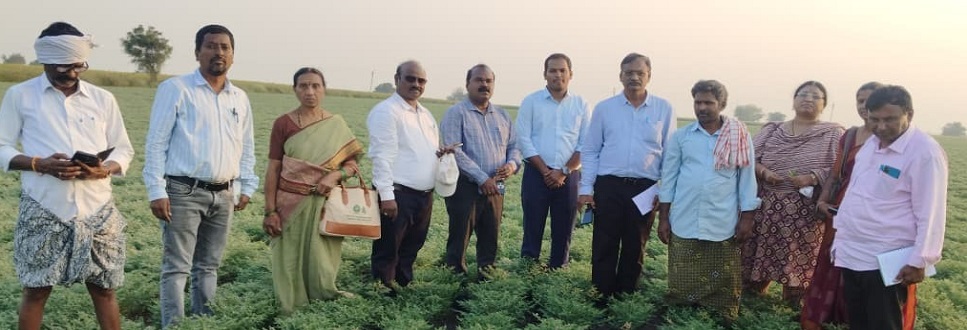
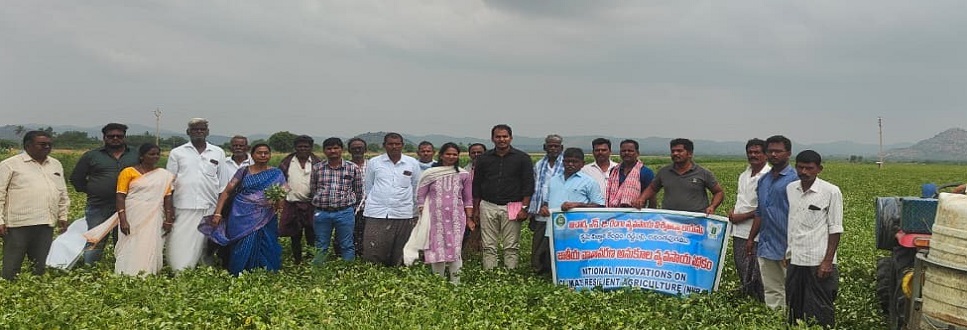
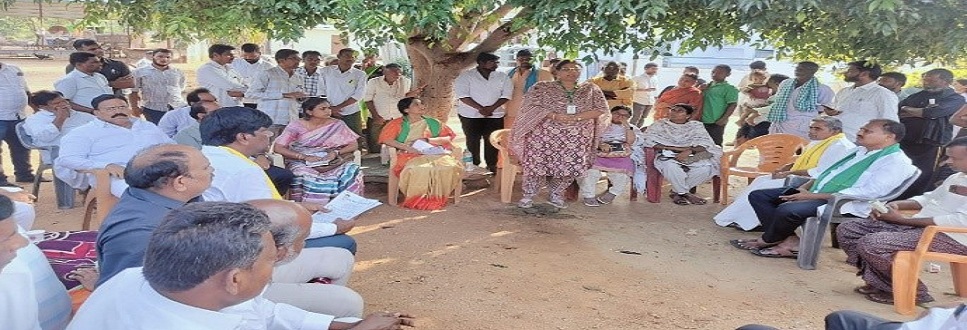
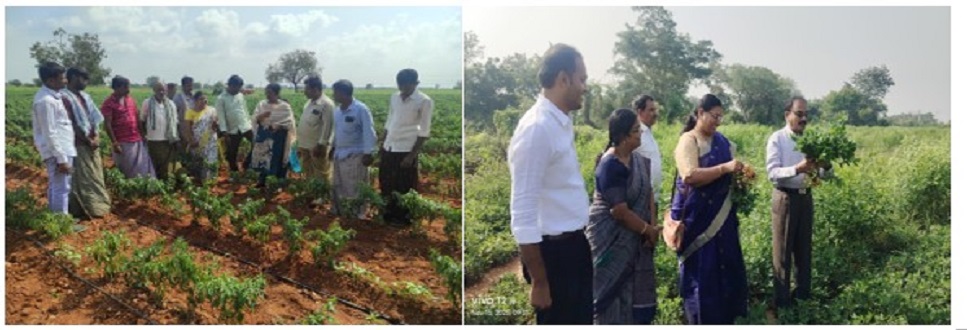
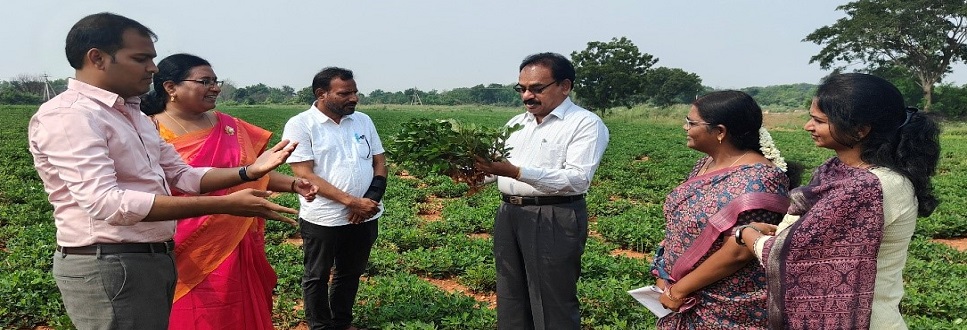
Field visit cum monitoring by Director of Extension, ANGRAU during 90 DAS crop in Cotton


